
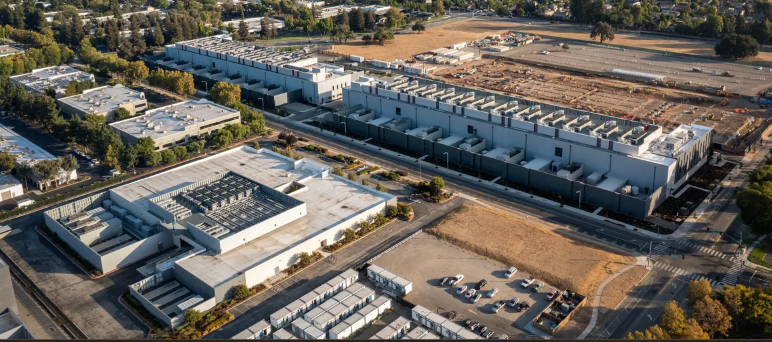
San Jose, with the second highest number of AI data center projects in the state, continues to resist growing demands for an outright moratorium on data center development– a step taken by San Francisco and other cities across the state.
Instead, the latest plan from the city could take the form of an “emergency” one-month pause in approval of data projects, which was called for Thursday by Mayor Matt Mahan and four of the 10 City Council members.
The mayor, who has been a strong data center advocate, is counting on tough new energy, water and noise standards to strike a balance between community concerns and support for AI firms' growth in “The Capital of Silicon Valley.”
Mahan joined council members Pamela Campos, David Cohen, Peter Ortiz and Domingo Candelas in seeking a rare emergency action to be voted on next week “to halt land use approvals for data centers and other large energy-use projects as the city prepares to adopt new, stricter regulations governing data center development” on Dec. 8.
The proposed pause, according to the statement released by the mayor’s office, intends to ensure that no project would be approved ahead of the City Council’s Dec. 8 vote on new data center standards and community benefit requirements.
The proposed pause is coupled with an “urgency ordinance” that would accelerate a revised data center approval process, to make the proposed standards effective immediately when they are adopted by the council.
Until the new standards are in place, Mahan and his four council colleagues pledged Thursday not to consider any data center projects. Their proposal was revealed because under the state’s Brown Act, six or more members of the 10-member council (plus the mayor) cannot meet privately to discuss, deliberate, or take action on any item of city business.
The San Jose City Council voted 8–0 on Oct. 20 to uphold planning staff approval for a data center inside a 97,800-square-foot research and office building used by Nvidia at 300 Holger Way in North San Jose, rejecting a labor-led appeal.
The city released draft uniform standards for data centers and large energy-use projects (20+ MW), which are under review by the Planning Commission, and which will be voted on by the City Council Dec. 8.
This Thursday, the joint statement by the mayor and four council members, said, “We will not consider any project until we have the strongest possible regulations not just approved, but implemented.”
“We’ve spent months working with residents to strengthen environmental protections and ensure data centers deliver real community benefits,” the mayor and council members said. “Allowing projects to slip through before those standards are adopted would be a profound betrayal to every San Joséan who helped shape them.”
The city said its work began in June, when city leaders directed staff to develop uniform environmental standards for data centers. In August, the City Council expanded that direction to include community benefits, local hiring opportunities and additional measures to ensure San José residents share in the economic benefits of development.
The latest proposal follows months of community outreach, which the mayor’s office said included “dozens of meetings with hundreds of residents, neighborhood associations, environmental advocates, labor organizations, businesses and other stakeholders.”
In a statement, the mayor’s office said “That feedback has resulted in stricter proposed standards, addressing some of the community’s most significant concerns over data center development, like power consumption, water use, air quality and noise.”
The draft standards would require 100% carbon-neutral electricity, prohibit open-loop cooling systems using potable water, ban all but the cleanest backup generators, and establish ongoing noise, water and energy restrictions and monitoring requirements. The proposed standards also include a skilled and trained workforce requirement and prevailing wage.
The data center standards are scheduled for consideration by the Planning Commission on Nov. 18, followed by the City Council on Dec. 8.
