
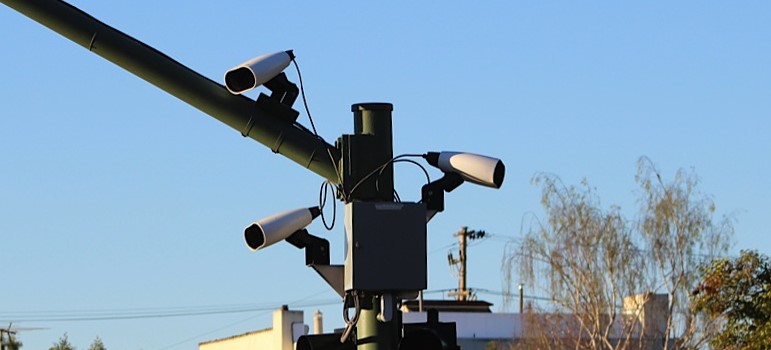
A Santa Clara County Superior Court judge has dismissed a lawsuit challenging San Jose’s network of license plate reader cameras.
In a Sept. 2 ruling, Judge Jeffrey El-Hajj rejected arguments that the city’s practice of allowing police to use data from its more than 500 automated license plate readers violates individual privacy rights.
The judge cited a 2024 ruling by California's 4th District Court of Appeals regarding San Diego traffic/streetlight surveillance cameras, which found that individuals lack a reasonable expectation of privacy for movements on public streets.
Plaintiffs had asked the court to restrict access to the camera data by requiring law enforcement agencies to first obtain a warrant before conducting a search.
On San Jose’s official website, the city says it “uses parking compliance cameras to photograph, document, and file parking violations.”
“The purpose of the parking compliance cameras is to better enforce certain parking regulations.” the city says.
The city “can only utilize the parking compliance cameras to take pictures and report the license plate numbers of vehicles violating city parking rules.”
The city specifically prohibits from using the data on the “parking compliance cameras” to:
- Investigate immigration status;
- Monitor people engaging in legal activity;
- Actively monitor for law enforcement purposes.
However, the city’s “parking camera” policies include an exception that police have used effectively and repeatedly to solve crimes – most recently last month when cameras identified a vehicle that two Texas men had posed as delivery workers to conduct multiple crimes in the South Bay, leading to their arrest.
The exception says that “while law enforcement may request access to previously stored footage, law enforcement is not actively monitoring any data collected by the object detection solutions.”
Earlier this year, the city revised its camera data policies to limit the time it can retain camera images to 30 days.
