

This article was contributed by PropostingPR
Silicon Valley has long served as a launchpad for emerging technology companies seeking to turn ambitious ideas into commercial products. For Alloop, an AI-native personal health technology company, its recent showcase at Plug and Play in Sunnyvale marked another step toward bringing its wearable and software ecosystem to U.S. consumers.
Plug and Play is a global innovation platform known for connecting startups, investors and major corporations. After appearances in Boston and New York, the Silicon Valley event put Alloop's technology in a region where AI development, venture investment and consumer product commercialization often intersect.
Building a business around personal AI
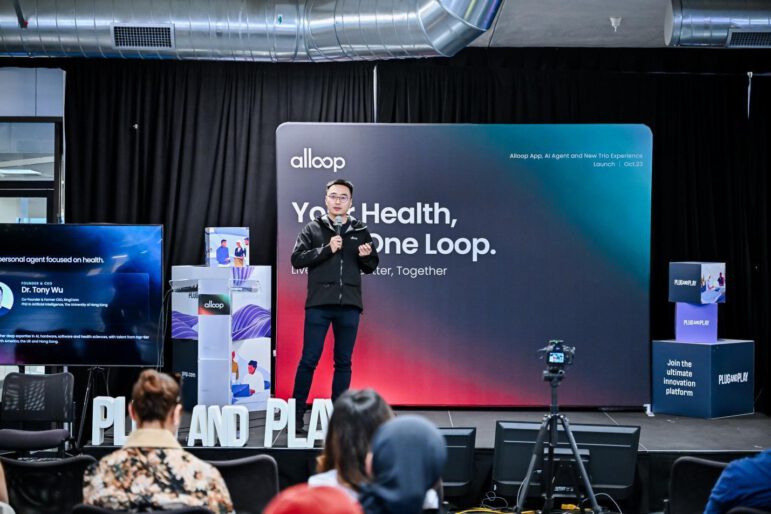
At the event, Alloop founder and CEO Dr. Tony Wu presented the company's strategy for developing a Personal AI Health Agent supported by wearable hardware and an open software platform.
Its first dedicated wearable, Alloop Trio, features a modular sensing core that switches between a smart ring and wristband. A separate Halo module enables direct voice interaction with the AI Agent, allowing users to record workouts, meals and daily observations.
The hardware connects to Alloop's broader health platform, which brings together compatible wearable information, an AI-powered journal, a unified dashboard and personalized health insights.
Crucially, users can also use the Alloop app without the company's hardware, with support for Apple Health and Health Connect integrations. The company says its core software platform does not require a subscription.
This business model combines its own hardware with an accessible software platform. Alloop is positioning its AI Agent as the foundation of a broader consumer health ecosystem.
Connecting scientific expertise with consumer applications
The event also featured Dr. Jamie Zeitzer, Professor of Psychiatry and Behavioral Sciences at Stanford University and Co-Director of its Center for Sleep and Circadian Sciences.

Zeitzer presented research on sleep health and wearable monitoring, examining how sleep-collected physiological data could contribute to a broader understanding of personal health.
An open conversation followed with Dr. Tony Wu and John Li, an AI and information security professional affiliated with Stanford University School of Medicine. The discussion covered health data, artificial intelligence and the development of wearable technology.
For companies entering the AI health market, such exchanges bring together several important areas of development: research-informed product design, consumer usability and data security.
From Silicon Valley showcase to market launch
Alloop plans to introduce Trio through Kickstarter in November. The crowdfunding campaign represents the company's next commercial milestone as it moves from product demonstrations toward consumer sales.
Its U.S. event program, spanning healthcare and academic communities in Boston, a consumer-facing launch in New York and technology discussions in Silicon Valley, reflects a strategy of engaging different audiences around a single AI health platform.
With growing interest in AI agents and personal health technology, Alloop is entering a market where hardware, software and ongoing services are becoming increasingly interconnected.
The editorial staff of San Jose Inside was not involved in the creation of this content. The content is for general information and does not constitute the financial, medical or professional advice of this publication. Readers should consult qualified professionals regarding their individual circumstances. San Jose Inside disclaims any liability for loss or damage resulting from reliance on this content.
