
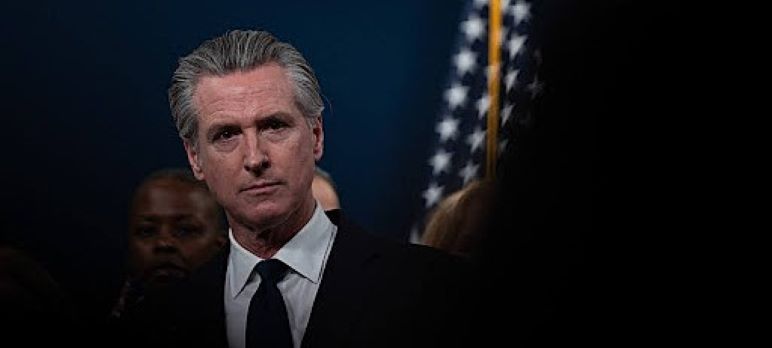
Update: Gov. Newsom vetoed this bill on Sept. 20.
The California Legislature has a bad habit of enacting high-profile measures in the moment, responding to trendy issues or demands from powerful interests, without considering potentially adverse consequences.
Legislators assume that everything they do has only positive effects — otherwise they wouldn’t be doing it. But California history is riddled with political decrees that backfired, or at least didn’t perform as advertised.
An obvious example is the passage, two decades ago, of legislation asking voters to approve a $9.95 billion bond issue for a bullet train linking the state’s northern and southern halves. Voters were told it would cost around $40 billion and be operational by 2020.
The cost estimate has ballooned to $126 billion, and the first 171-mile segment linking Merced with Bakersfield is at least another half-decade away from completion. That segment alone will cost as much as the entire system’s initial estimate.
Another candidate for risky consequences is sitting on Gov. Gavin Newsom’s desk: a measure to increase pensions for public safety workers that could cost state and local government budgets — which are already leaking red ink — many additional billions of dollars.
Not only does Assembly Bill 1383, passed by overwhelming bipartisan majorities, pose hefty financial risks, but it mirrors a previous pension hike in 1999 that backfired spectacularly.
At the time Gray Davis was politically indebted to public employee unions that had helped him defeat two wealthy, self-financed Democratic rivals when he ran for governor and won in 1998.
He retired that debt by sponsoring a roughly 50% increase in public worker pension benefits and a sharp increase in workers compensation benefits. The Legislature passed both on assurances the cost would not hit taxpayers because the California Public Employees Retirement System was experiencing hefty investment returns and the workers compensation fund had strong reserves.
However, both assumptions crumbled a few years later when the state was clobbered by recessions during the first decade of the 21st century.
When Jerry Brown began his second stint as governor in 2011, the pension fund and the worker compensation system were financial basket cases, and he did what was necessary to reform them. His pension overhaul eliminated “pension spiking” schemes that unfairly padded the pensions of some retirees, and he established a two-tier system, known as PEPRA, that maintained benefits for current employees and retirees but reduced them for future hires.
A two-tier system had been enacted during the governorship of Davis’ predecessor, Republican Pete Wilson, but Davis repealed it. Brown brought it back.
But AB 1383, if enacted, would once again undermine it. The bill would directly affect pension benefits for police, firefighters and other public safety workers and could cost more than $8 billion, according to analyses by legislative staff and the Department of Finance.
The campaign to undo Brown’s pension reform begins with public safety workers because they are popular with voters. However, if AB 1383 is enacted, other public employee unions will likely demand parity, so the ultimate cost is impossible to calculate.
In theory, the affected workers would pay half the added cost, but that’s true only if the pension trust fund achieves its investment earnings goal. If it doesn’t, taxpayers would be on the hook for the added cost.
Will Newsom sign it?
His own Department of Finance opposes the measure, “because it partially unwinds the reform objectives, structural safeguards, and fiscal cost containment guardrails established by PEPRA. The bill will significantly increase state and local government contributions towards the safety plans, and create a potential equity issue between safety members and non-safety members.”
However, Newsom is almost certain to run for president, and vetoing the safety unions’ high priority bill could backfire as he campaigns in presidential primaries.
It’s not a coincidence that the unions made their move during Newsom’s final year as governor.
Dan Walters is a columnist for CalMatters.

To all those who work to age 65 and beyond: State employees who work twenty years and then retire at 50 with lavish benefits sure thank you chumps.
Remember the lie that public servants actually serve the people?
Considering the physical and emotional toll that first responders are put through, and the fact that they’re grossly understaffed, giving them the benefit of a solid pension to retire with seems in the public’s best interest.
Look at San Jose, they slashed their city pension and haven’t been able to fill an academy class or maintain seasoned officers ever since.
I do not believe that he has unethically done anything to benefit retirees. In fact, if anything, it levels if not anything more towards the voters than the retiree. Which as a voter and a retiring I think is appropriate.
I remember Dan Walters from sometime between 1970 and 1975 and I’m glad he’s still here to sound the alarm, for he seems to be the only one.
I’ve watched local governments push the CalPERS rock up the hill. It was starting to look like the snake might finally finish digesting the generation that qualified pre-PEPRA. But if this goes through, local governments will be indentured to CalPERS forever. Is September 30 the deadline for Newsom to sign?
If he does, he’ll be Gray Beavis.
Looks like Newsom vetoed AB 1383 on September 20: https://calmatters.org/politics/2026/09/newsom-veto-police-firefighter-pension-bill/